
Catalyst
ON VIEW: May 23 - September 14, 2025
RECEPTION: Friday, September 12 | 5:00PM - 7:00PM
Catalyst showcases eight photo-based artists from across Canada who are revitalizing historic and analogue photographic processes in their work. Using processes such as wet plate collodion, tintype, anthotype, and gum bichromate, the artists in this exhibition acknowledge the complex legacies of photography in Canada, while at the same time reclaiming these processes as tools of resistance, reflection, and celebration.
As we celebrate our 20th Anniversary, we reflect on SPAO’s enduring commitment to analogue photographic arts education by highlighting artists who signal a powerful return to hands-on image-making.
Catalyst présente huit artistes photographes du Canada qui revitalisent les procédés photographiques historiques et analogiques dans leur travail. En utilisant des procédés tels que le collodion humide, le tintype, l'anthotype et le bichromate de gomme, les artistes de cette exposition font un clin d'œil à l'héritage complexe de la photographie au Canada, tout en se réappropriant ces procédés comme outils de résistance, de réflexion et de célébration.
Alors que nous célébrons notre 20e anniversaire, nous réfléchissons à l'engagement durable de SPAO en faveur de l'enseignement des arts photographiques analogiques en mettant en lumière des artistes qui signalent un retour puissant à la création d'images analogiques.
-
12 - 5pm, Wednesday to Sunday
INSTALLATION VIEWS


THE ARTISTS
Morgan Sears-Williams
Vancouver, BC
Morgan Sears-Williams’ practice embraces the use of analog film as a form of projected image and as a sculptural material, considering space and queerness through analog technologies. Bridging eco-processing, experimental film and queer history (both personal and political), she aims to create intimate experiences for viewers to expand their ideas of queer space and time.
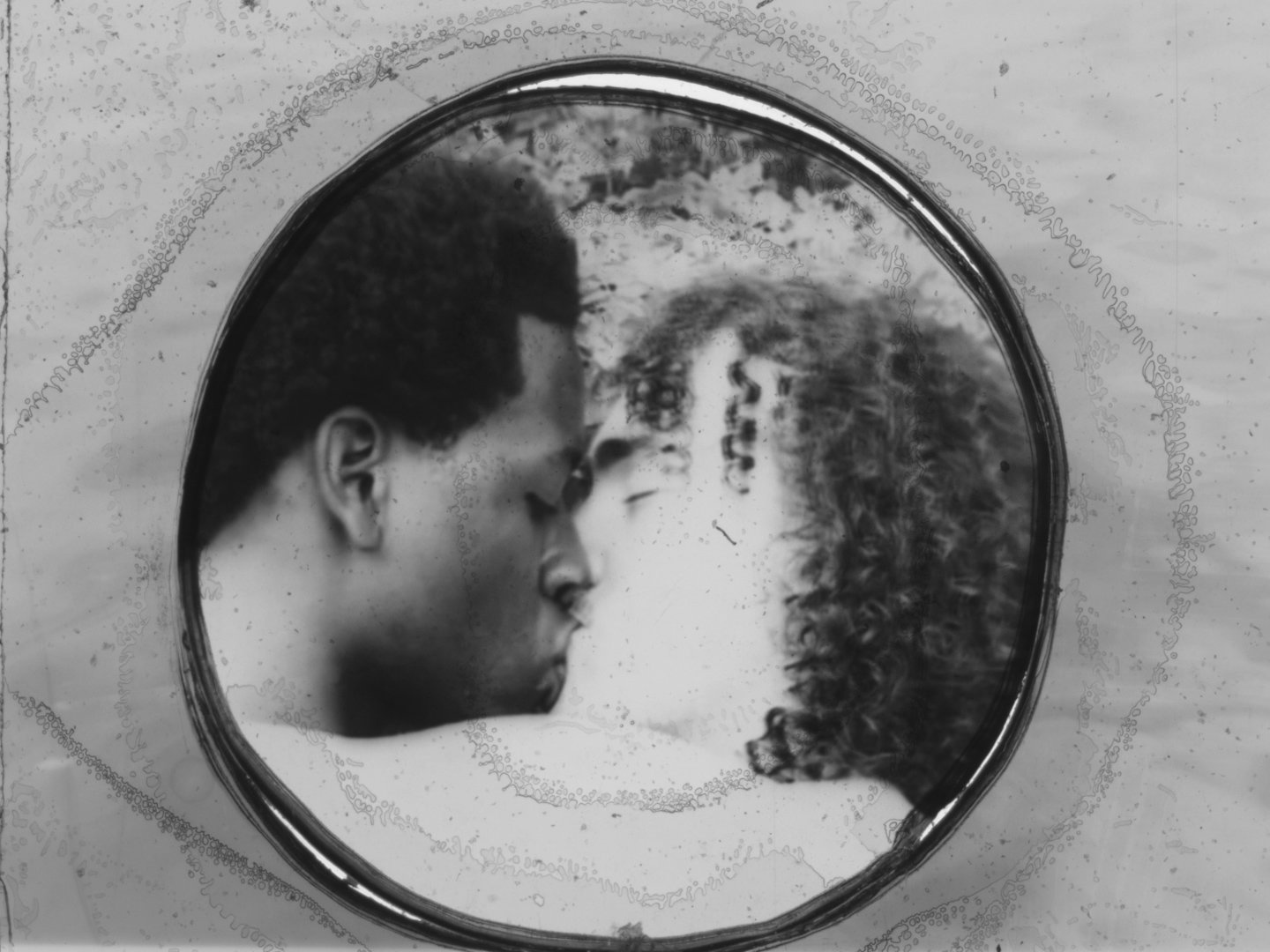
through the bushes and the trees, you’ll find me intertwines the personal and political histories of Hanlan’s Point Beach, the site of Canada’s first pride gathering in the early 1970s. A strategically placed hole punch serves as a symbolic peephole, reflecting the cruising areas on the beach that invite both spectatorship and participation. By situating the tender moments of queer affection amidst the vast body of water surrounding the Toronto islands, the film celebrates and interrogates the histories and spaces of queer love and resistance.
-
Morgan Sears-Williams utilise le film analogique comme forme d'image projetée et comme matériau sculptural, considérant l'espace et l'homosexualité à travers les technologies analogiques. Faisant le lien entre l'éco-traitement, le cinéma expérimental et l'histoire queer (à la fois personnelle et politique), elle cherche à créer des expériences intimes pour les spectateurs afin d'élargir leurs idées de l'espace et du temps queer.
through the bushes and the trees, you'll find me entrelace les histoires personnelles et politiques de la plage de Hanlan's Point, le site du premier rassemblement de fierté au Canada au début des années 1970. Un poinçon stratégiquement placé sert de judas symbolique, reflétant les zones de drague sur la plage qui invitent à la fois au spectacle et à la participation. En situant les tendres moments d'affection queer au milieu de la vaste étendue d'eau qui entoure les îles de Toronto, le film célèbre et interroge l'histoire et les espaces de l'amour et de la résistance queer. -

Kali Spitzer
Vancouver, BC
Kali Spitzer is a photographer living on the Traditional Unceded Lands of the Tsleil-Waututh, Skxwú7mesh and Musqueam peoples. Kali’s work embraces the stories of contemporary BIPOC, Queer and trans bodies, creating representation that is self determined. Kali’s collaborative process is informed by the desire to rewrite the visual histories of indigenous bodies beyond a colonial lens. Kali’s heritage deeply influences her work as she focuses on cultural revitalization through her art, whether in the medium of photography, ceramics, tanning hides or hunting. She has worked with film in 35 mm, 120 and large format, as well as the wet plate collodion process using an 8x10 camera.
-
Kali Spitzer est une photographe qui vit sur les terres traditionnelles non cédées des peuples Tsleil-Waututh, Skxwú7mesh et Musqueam. Le travail de Kali embrasse les histoires des corps contemporains BIPOC, Queer et trans, créant une représentation qui est autodéterminée. Le processus de collaboration de Kali est informé par le désir de réécrire les histoires visuelles des corps indigènes au-delà d'une lentille coloniale. L'héritage de Kali influence profondément son travail, car elle se concentre sur la revitalisation culturelle à travers son art, que ce soit par le biais de la photographie, de la céramique, du tannage des peaux ou de la chasse. Elle a travaillé avec des films de 35 mm, 120 et grand format, ainsi qu'avec le procédé du collodion humide en utilisant un appareil photo 8x10.
-


EVERGON
Montreal, QC
Artist, teacher and activist, Evergon (aka Celluloso Evergonni, Eve R. Gonzales, Egon Brut and Big Hellion) is a real cultural icon. Throughout a prestigious career of more than fifty years, he has always been recognized to be at the avant-garde of experimentation in the field of photography and lens-based mediums. Important precursor of homo-erotic contemporary art and an iconic figure for the homosexual communities, his works have been at the heart of numerous important exhibitions worldwide. His works are included in private and institutional collections among which are the Musée national des beaux arts du Québec and the National Gallery of Canada. Evergon: Théâtres de l'intime, a major retrospective of his works was recently presented at the Musée national des beaux arts du Québec. In 2023, Evergon received the Governor General’s Awards in Visual and Media Arts and the Prix Paul-Émile-Borduas.
-
Artiste, enseignant et activiste, Evergon (alias Celluloso Evergonni, Eve R. Gonzales, Egon Brut et Big Hellion) est une véritable icône culturelle. Au cours d'une carrière prestigieuse de plus de cinquante ans, il a toujours été reconnu comme étant à l'avant-garde de l'expérimentation dans le domaine de la photographie et des supports à base d'objectif. Précurseur important de l'art contemporain homo-érotique et figure emblématique des communautés homosexuelles, ses œuvres ont été au cœur de nombreuses expositions importantes dans le monde entier. Ses œuvres font partie de collections privées et institutionnelles, parmi lesquelles le Musée national des beaux-arts du Québec et le Musée des beaux-arts du Canada. Evergon : Théâtres de l'intime, une importante rétrospective de ses œuvres, a récemment été présentée au Musée national des beaux-arts du Québec. En 2023, Evergon a reçu le Prix du Gouverneur général en arts visuels et en arts médiatiques et le Prix Paul-Émile-Borduas.
-


Image by Gigi Angeletti (Jean Jacques Ringuette)
Michelle Sound
Alberta
Michelle Sound is a Cree and Métis artist, educator, and mother. She is a member of Wapsewsipi/Swan River First Nation in Northern Alberta, her maternal side is Cree, and her paternal side is Métis from central Alberta. She was born and raised on the unceded and ancestral home territories of the xʷməθkwəy̓əm (Musqueam), Skwxwú7mesh (Squamish) and Səl̓ílwətaʔ/Selilwitulh (Tsleil-Waututh) Nations.
Medicine Prints and maskihkiy are a series of cyanotype prints on elkhide that are an exploration of materiality and process that express relation to the land. The elkhide photograms and prints are created using a variety of flora, traditional medicines, and landscape photographs of/from my ancestral territory in Alberta. The works are a process of image making using natural materials and techniques to create records of connection with the land and relatives. The drums and hides reveal a relationship to memory and territory that demonstrates the importance of land as a place of connection and community.
-
Michelle Sound est Cree et Métisse. Elle est une artiste, une éducatrice et une mère. Elle est membre de la Première nation de Wapsewsipi/Swan River dans le nord de l'Alberta, sa mère est Cree et son père est Métis du centre de l'Alberta. Elle est née et a grandi sur les territoires non cédés et ancestraux des nations xʷməθkwəy̓əm (Musqueam), Skwxwú7mesh (Squamish) et Səl̓ílwətaʔ/Selilwitulh (Tsleil-Waututh).
Medicine Prints et maskihkiy est une série de cyanotypes sur la peau tannée d’élan (caribou ou wapiti) qui explore la matérialité et le processus exprimant la relation à la terre. Les photogrammes et les tirages sur peau tannée sont créés à partir d'une variété de flore, de médicaments traditionnels et de photographies de paysages de mon territoire ancestral en Alberta. Les œuvres sont un processus de création d'images utilisant des matériaux et des techniques naturels pour créer des enregistrements du lien avec la terre et les parents. Les tambours et les peaux révèlent une relation à la mémoire et au territoire qui démontre l'importance de la terre en tant que lieu de connexion et de communauté.
-


Francis O’Shaughnessy
Montreal, QC
Francis O'Shaughnessy is a Quebecois artist-researcher and curator whose work primarily focuses on photography and performance art. He earned a Master Degree from the Université du Québec à Chicoutimi in 2007 and since 2016, he has been a Doctor (Ph.D.) in Art Studies and Practices from the Université du Québec à Montréal with a specialization in performance.
In art, he places particular emphasis on productions deeply rooted in explorations of the self-portrait in the landscape. Recently, he received the Prix People Vote Award at the Refocus Awards (2023) and was awarded the Luxembourg Art Prize (2021) for his photographic creations of humid collodion realized during the pandemic. He was also nominated for the Prix national de l'Audace in 2013 for his photographic series of submerged mines in the Ardennes region of France.
-
Francis O'Shaughnessy est un artiste-chercheur et commissaire québécois dont le travail porte principalement sur la photographie et la performance. Il a obtenu une maîtrise de l'Université du Québec à Chicoutimi en 2007 et, depuis 2016, il est docteur (Ph.D.) en études et pratiques artistiques de l'Université du Québec à Montréal avec une spécialisation en performance.
En art, il accorde une importance particulière aux productions profondément ancrées dans les explorations de l'autoportrait dans le paysage. Récemment, il a reçu le Prix People Vote Award aux Refocus Awards (2023) et s'est vu décerner le Luxembourg Art Prize (2021) pour ses créations photographiques au collodion humide réalisées pendant la pandémie. Il a également été nommé au Prix national de l'Audace en 2013 pour sa série photographique de mines immergées dans les Ardennes.
-


Natalie Goulet
Halifax, NS
Natalie Goulet (she/they) is a Canadian artist working within realms of expanded photography, material experimentation, and performance. Of Scottish/French/Irish settler ancestry, Goulet was raised in Northern Ontario (Treaty 9) and is currently based in Kjipuktuk/Halifax. Holding an MFA from NSCAD University and a BFA from the University of Ottawa, their work critically examines place, entanglement, and human impact on the environment, fostering an empathic response to histories of harm and extraction.
“Chronotopes of Contamination” rethinks landscape photography by integrating ecological analogue image-making that resists the medium’s colonial and industrial history. Centering on polluted sites across Mi’kma’ki, this series delves into the intersections of industrial impact and environmental racism, grounding my belief that photography can serve as a form of witness, advocacy, and community empowerment. By employing slow and alternative photographic processes like soil chromatography, solargraphy, and plant-based film development, I aim to bear witness to the environmental degradation of these sites while rejecting industrial photographic chemistry.
-
Natalie Goulet (she/they) est une artiste canadienne qui travaille dans les domaines de la photographie élargie, de l'expérimentation matérielle et de la performance. D'origine écossaise, française et irlandaise, elle a grandi dans le nord de l'Ontario (Traité 9) et vit actuellement à Kjipuktuk/Halifax. Titulaire d'une maîtrise en beaux-arts de l'Université NSCAD et d'un baccalauréat en beaux-arts de l'Université d'Ottawa, son travail examine de façon critique le lieu, l'enchevêtrement et l'impact humain sur l'environnement, favorisant une réponse empathique à l'histoire des préjudices et de l'extraction.
« Chronotopes de contamination » repense la photographie de paysage en y intégrant des images analogiques écologiques qui résistent à l'histoire coloniale et industrielle du médium. Centrée sur les sites pollués de Mi'kma'ki, cette série explore les intersections de l'impact industriel et du racisme environnemental, et fonde la conviction de l’artiste que la photographie peut servir de forme de témoignage, de défense et d'autonomisation de la communauté. En employant des procédés photographiques lents et alternatifs tels que la chromatographie du sol, la solargraphie et le développement de films à base de plantes, Natalie cherche à témoigner de la dégradation environnementale de ces sites tout en rejetant la chimie photographique industrielle.
-


Anahita Norouzi
Montreal, QC
Anahita Norouzi is a multidisciplinary artist, originally from Tehran and active in Montreal since 2018. She holds advanced degrees in Fine Arts and Graphic Design from Concordia University in Montreal. Her practice is research-driven, derived from marginalized histories, with a particular focus on the legacies of botanical explorations and archeological excavations. Articulated across a range of materials and mediums including sculpture, installation, photography, and video, her work interrogates different cultural and political perspectives on the human and non-human “other.”
Using images of pressed Persian iris specimens held in Western herbariums, all superimposed information was digitally removed, leaving only the anatomical contours of the plants. Anthotypes were then created from these modified images using a natural dye made from saffron. To reintroduce the original polychromatic palette of the different species, color swatches were embroidered into each sheet. On top of the ghostly yellow prints, Norouzi replaced scientific projections with archival findings, adding a translucent fabric layer that carries evidence of Western interventions in each province where these species originated—meddling that has forever changed the course of history in Iran, and many other countries.
-
Anahita Norouzi est une artiste multidisciplinaire, originaire de Téhéran et active à Montréal depuis 2018. Elle détient des diplômes supérieurs en beaux-arts et en design graphique de l'Université Concordia à Montréal. Sa pratique est axée sur la recherche, dérivée d'histoires marginalisées, avec un accent particulier sur les héritages des explorations botaniques et des fouilles archéologiques. Articulé autour d'un éventail de matériaux et de médiums, dont la sculpture, l'installation, la photographie et la vidéo, son travail interroge différentes perspectives culturelles et politiques sur « l'autre » humain et non-humain.
Norouzi interroge la manière dont les explorations botaniques et la recherche scientifique sont liées à l'exploitation des géographies non occidentales. À partir d'images de spécimens d'iris persans pressés conservés dans des herbiers occidentaux, toutes les informations superposées ont été supprimées numériquement, ne laissant subsister que les contours anatomiques des plantes. Des anthotypes ont ensuite été créés à partir de ces images modifiées en utilisant un colorant naturel à base de safran. Pour réintroduire la palette polychrome originale des différentes espèces, des échantillons de couleurs ont été brodés sur chaque feuille. Par-dessus les impressions jaunes fantomatiques, Norouzi a remplacé les projections scientifiques par des documents d'archives, ajoutant une couche de tissu translucide qui porte les preuves des interventions occidentales dans chaque province où ces espèces sont originaires - des manipulations qui ont changé à jamais le cours de l'histoire en Iran et dans bien d'autres pays.
-


Christine Fitzgerald
Ottawa, ON
Christine Fitzgerald is a photo-based artist who grew up in the Eastern Townships in Québec, who now lives and works in Ottawa, Canada. Her work is inspired by her French-Canadian roots and her love of the natural world. She sees photography as a medium for creating unique physical objects. This growing conviction is the basis of her current artistic practice, as she explores the possibilities of using antiquated methods of image and photographic print making as a means of expression.
Captive is about parrots that live in captivity. The series is a meditation on questions surrounding the often conflicted and tenuous relationship between humans and wildlife. These large, closely cropped portraits of noble parrots are intended to promote an emotional connection between viewers and subject, drawing viewers into deep engagement with questions about our entanglement with species extinction.
-
Christine Fitzgerald est une artiste photographe qui a grandi dans les Cantons de l'Est au Québec et qui vit et travaille aujourd'hui à Ottawa, au Canada. Son travail s'inspire de ses racines canadiennes-françaises et de son amour du monde naturel. Elle considère la photographie comme un moyen de créer des objets physiques uniques. Cette conviction grandissante est à la base de sa pratique artistique actuelle, alors qu'elle explore les possibilités d'utiliser des méthodes désuètes de fabrication d'images et de tirages photographiques comme moyen d'expression.
Captive porte sur les perroquets qui vivent en captivité. La série est une méditation sur les questions entourant la relation souvent conflictuelle et ténue entre les humains et la faune. Ces grands portraits de perroquets nobles, cadrés au plus près, sont destinés à favoriser un lien émotionnel entre le spectateur et le sujet, l'incitant à s'engager profondément dans les questions relatives à notre implication dans l'extinction des espèces.
-


CURATORS

Katie Lydiatt
Katie Lydiatt is an arts administrator, writer, curator and researcher living and working on the unceded territory of the Algonquin, Anishinabek people (Ottawa.) She holds an MA in Art History from Carleton University, and a Curatorial Studies diploma from the Institute of Comparative Studies in Literature, Art and Culture. She is currently the Gallery Programming Manager and Residency Coordinator at SPAO.
She has held positions at SAW Gallery, The Carleton University Art Gallery, The National Gallery of Canada, and served as Editor for the RENDER Graduate Journal of Arts and Culture in 2019.

Quisque iaculis facilisis lacinia. Mauris euismod pellentesque tellus sit amet mollis.